
Education
It’s no secret that education is a critically important path out of poverty for children in slums and depressed rural areas. Our LEAD education program is unique, long-term and integrated with our other programs to maximize success.
And YOU can help provide this critical education resource for only $29 a month!
LEAD stands for “Learning and Equipping through Academics and Discipleship.”
We consider character and future leadership potential. We follow up regularly with schools. We expect parents to pay whatever they can. Where we can, we provide resources in addition to tuition that are critical to educational success.
The result? Low failure rates… Strong performance… Family involvement… Future leaders receiving one of the most important resources for breaking the poverty cycle.
Will You Help LEAD?
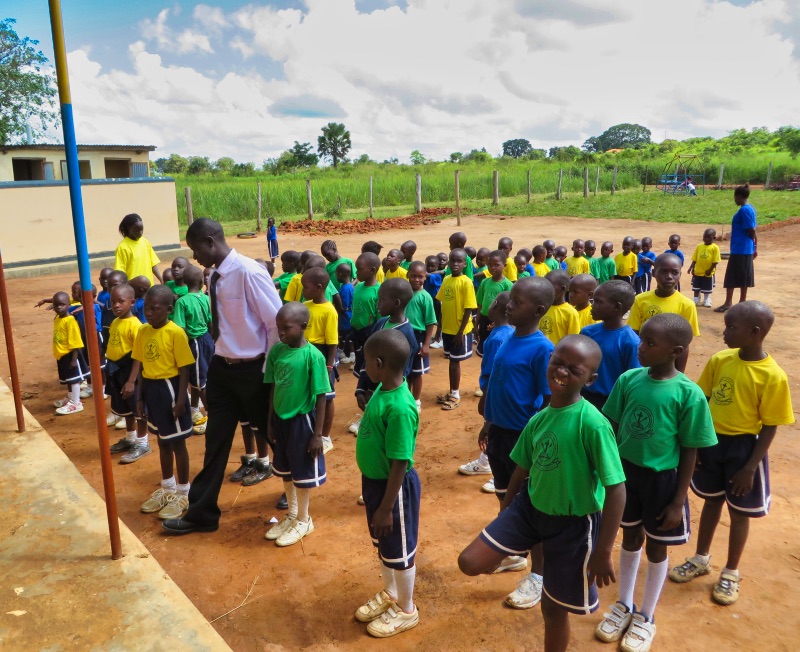
200 children and young people benefitted from our education program last year!
We want to provide education resources for hundreds of kids! You can help… Please join our LEAD team!
• $29 a month is all it takes to provide education opportunities for needy kids!
• Your monthly gift, combined with the gifts of others, will help provide this critical resource to break the poverty cycle.
• Each month, you’ll receive a story about a different child or young person who is receiving an education because of your support and the support of others!
CHILD’s Education Initiatives
It is no secret that providing education for children is a key strategy for breaking the cycle of poverty everywhere. Countless organizations and ministries focus on education across the globe, and countless studies highlight the part education plays in helping people out of poverty.
CHILD’s primary work is in urban slums and poor rural areas in, Uganda. Education provides children and young people with a way out of the slum. It provides hope to improve the extremely difficult life of subsistence farming in a village. And many times, an educated child can provide for his entire family to leave behind the poverty and brokenness of slum life or advance his/her living conditions in their village. The areas where CHILD works are ripe for the harvest of helping alleviate poverty through education.
CHILD’s leaders in Uganda understand all of this first hand, and helping to educate children is a key part of the organization strategy. This document shares the distinctives of our national leaders’ approaches. These distinctives make providing education particularly effective in the context of our collective mission-alleviate suffering, poverty and oppression by helping people build secure, productive and just communities.
The depth of poverty and dismal quality of life in the slums are nearly impossible to adequately describe. Unemployment is rampant. The fight for survival results in high levels of theft, early childhood marriages and prostitution. Assault and rape are widespread, and HIV rates are high. Gang activity casts a pall over everyone. Clean water is very scarce, leading to chronic health issues. Home to a typical family, often with several children, is a one-room crude metal shack of less than 100 square feet. The slums are almost always in low-lying areas that flood when the rains are heavy.
Unfortunately, education through public schools in the slums provides little preparation for the future. Government funding is limited, most teachers are ill equipped, the student to teacher ratio is very high, and the curriculum is inadequate. Furthermore, participation and attendance by children is poor.
Parents are not usually very involved, as they are concerned mostly with their own fight for family survival.
While life in a village may not appear to be as difficult as life in a slum, many of the same struggles exist. Rural public schools are also poor.
The struggles of daily life – simply trying to grow food or find something to eat and keep a roof over one’s head – occupy so much of parents’ time and energy. There are not many schooling options, and children must travel long distances to get to school, placing them at risk for abuse.
The term “private school” carries certain connotations in the Western word. We generally think “very expensive” and “exclusive”. This is not the case in Kampala or Gulu. Because government schools are generally not very good, many private schools exist to fill the gap. One cannot drive more than a block or two in these cities without seeing a sign pointing to a school nearby, and almost all are private. There is a wide spectrum of schools with a wide range of price. Language considerations are important. Some schools teach in the native language; others teach only in English; others do a mix.
In rural settings, private schools exist in trading centers and towns. There are not as many options as in cities, but they do exist and can provide a solid education for those who can afford it.
How does someone in the West who wants to help know where to start?
CHILD’s approach is unique in that we depend almost exclusively on the organization leaders in Uganda, to provide the strategy and implementation details. This is the best way to most help provide quality education for poor children in their unique contexts.
The following commonly asked questions (and answers) explain many of the ways our leaders provide education resources to needy children. These practices maximize the benefit to each child, and ultimately to the Kingdom of Christ.
Commonly Asked Questions
Through our core programs, the leaders come to know and minister to hundreds of children. It would never be possible to help educate them all, so they must make hard decisions. Many factors are taken into account. First, a child’s parents have to have been consistently involved with any of our various programs for at least one year. During this time, the leaders get to know the child and his/her family. They get an idea of the parents’ general willingness to support education for the child. If the family is involved with a church, they talk to church leaders to learn more.
Because our mission is to build leaders, our leaders look for that potential in children. Is he or she a natural leader among their peers? Does is he or she growing in character, spirit and commitment?
Considering all of these dynamics, our leaders prayerfully select children to help that they believe have the best chance to benefit from a long-term commitment to their education.
This varies from location to location and from child to child. There are many factors to consider. Depending upon where a student lives in relation to the school, he/she may continue to live with his/her family in the slum, or in a boarding hostel near the school.
Some schools are more expensive than others. Obviously, schooling is more expensive the older a child gets.
Our staff work with the schools to get the best deal possible for the children we help. They are very familiar with the schools in the area and have ongoing relationship with the leaders of many. Many times, schools will give a discount if we are sending multiple children. Because of the work we have done for so many years, some schools know of our effectiveness and are more likely to give us a discount. They have seen that our continuing work with the children increases their chance for success in school.
Generally, it costs around $50 per month for primary school education, $80 a month for secondary and vocational schools, and $150-250 a month for university.
Again, this varies. The children we serve generally come from the poorest of the poor. Most parents have little or no capacity to pay anything toward a child’s tuition. Nevertheless, we do want parents to have some “skin in the game”, however small, if at all possible.
When parents help to pay, it can actually help them emotionally. They are encouraged that they can help their child. They end up more engaged in their child’s education in this case. Sometimes, the parents genuinely can pay nothing; sometimes they provide for incidentals such as uniforms and supplies; sometimes they can also pay a small portion of the tuition itself.
Contrary to Western ideal, a college degree, and even completion of high school, is not a basic human right in these countries. For example, the Ugandan system of education is very competitive. There are milestone years where any child who wants to advance to the next level must take qualifying exams. This required when moving from primary to secondary school, from secondary to advanced secondary, and for university. Only a percentage of children qualify to move on at each step.
When we commit to help educate a child, we intend the commitment to last until the child reaches the highest level of education appropriate. For some, that may be finishing primary school; for others it may be finishing secondary or advanced secondary school; for
some, a trade or vocational school; and for some, it may be completing a university degree. Generally speaking, we support larger numbers of children in primary schools and increasingly smaller numbers of children higher up the education ladder.
Our leaders are involved regularly with the parents and the schools, following the progress of each child. They find out if there are problems, disciplinary issues, issues at home, and the like.
They do everything they can to mitigate potential problems that might lead to a drop out as soon as they see them. The retention rate of the children we help is very high – approximately 97%. The combination of parents, schools and CHILD working together gives each child the best chance of success.
CHILD’s approach to helping educate children is unique in that
1. It views education as a long-term proposition and a key element in the development of future leaders in both organization and secular pursuits.
2. It depends exclusively on organizational leaders to determine the best strategies that will work in our local context.
3. It maximizes the benefit of every dollar invested.